Is Atrial Fibrillation Dangerous? 7 Serious Risks You Should Never Ignore
Is atrial fibrillation dangerous? Atrial fibrillation itself is rarely immediately life-threatening, but left untreated, it can lead to serious complications, including stroke, heart failure, and a higher risk of death. The good news is that with the right treatment, most of these risks can be greatly reduced.
Atrial fibrillation (AFib) is the most common heart rhythm disorder, affecting more than 10 million Americans, according to the American Heart Association. Some people feel a racing or fluttering heartbeat; others have no symptoms at all and find out only after a complication. Here are seven serious risks every person with atrial fibrillation should understand.
What Is Atrial Fibrillation?
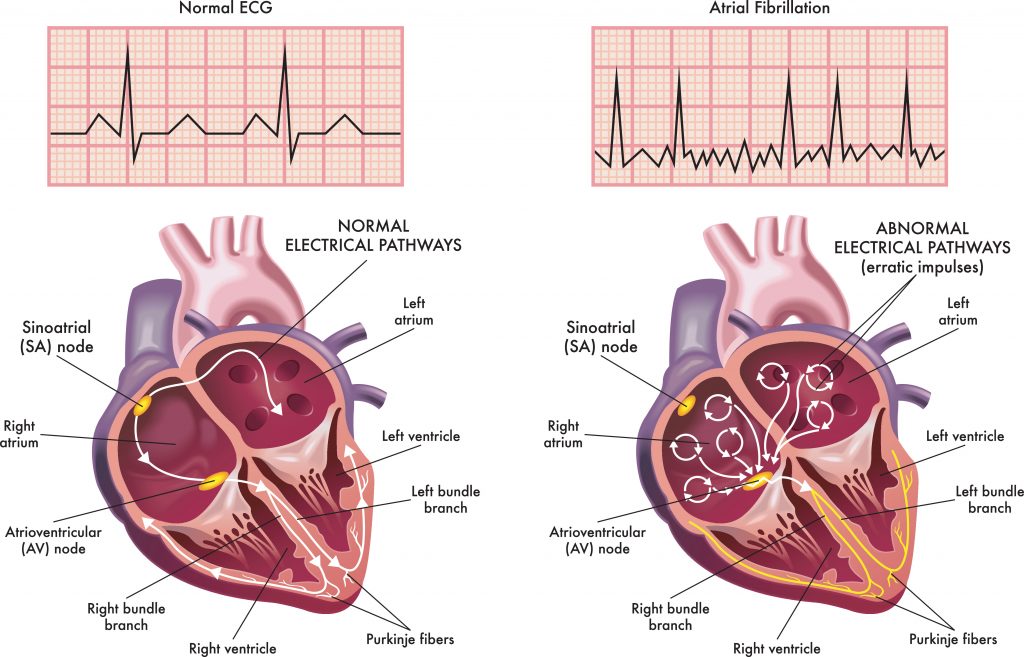
Normally, the heart’s upper chambers (atria) contract in a steady, coordinated rhythm. In atrial fibrillation, chaotic electrical signals cause the atria to quiver instead of beat effectively. The lower chambers (ventricles) often respond with a fast, irregular heartbeat.
Atrial fibrillation may come and go (paroxysmal), last longer (persistent) or become permanent. It tends to progress over time, which is why the 2023 ACC/AHA atrial fibrillation guideline treats it as a progressive disease and emphasizes early treatment.
1. Stroke and Blood Clots
Stroke is the most feared complication of atrial fibrillation. When the atria quiver instead of contracting, blood can pool and form clots, especially in a small vestigial pouch called the left atrial appendage. If a clot breaks loose, it can travel to the brain and cause a stroke, or block blood flow to the kidneys, intestines, or limbs (systemic embolism).
Atrial fibrillation raises the risk of stroke about fivefold. Strokes caused by atrial fibrillation also tend to be larger and more disabling than other strokes.
Your risk depends on other factors, including age, high blood pressure, diabetes, heart failure, prior stroke, vascular disease, and female sex. Cardiologists use a scoring system called CHA₂DS₂-VASc to estimate your risk and decide whether you need a blood thinner.
Know the signs of stroke (BE FAST): Balance loss, Eyes (vision changes), Face drooping, Arm weakness, Speech difficulty, Time to call 911.

2. Heart Failure
Atrial fibrillation and heart failure often feed each other. A fast, irregular heartbeat makes the heart pump less efficiently. When the atria quiver instead of contracting, the heart also loses the extra “kick” that helps fill the ventricles, which can reduce the amount of blood pumped by up to about 20% to 30% in some people.
Over time, this can cause or worsen heart failure, leading to shortness of breath, fatigue and swelling in the legs. People who have both conditions tend to have worse symptoms and outcomes than those with either one alone.
3. Tachycardia-Induced Cardiomyopathy
When atrial fibrillation keeps the heart racing for weeks or months, the heart muscle can become weakened and enlarged. This condition is called tachycardia-induced cardiomyopathy.
The encouraging news: it’s often reversible. When the heart rate is brought under control, or a normal rhythm is restored, heart function frequently improves, sometimes back to normal. That’s why it’s important to treat a persistently fast heart rate, even if you feel only mildly tired or short of breath.
4. Emergency Visits and Hospitalizations
Poorly controlled atrial fibrillation is a leading reason for emergency room visits and hospital admissions. Episodes of rapid heart rate, worsening heart failure, fainting, falls on blood thinners, and bleeding complications can all lead to hospital care.
Repeated hospitalizations disrupt life, increase health care costs and are often a sign that treatment needs to be adjusted. A clear treatment plan, including the right medications, possible rhythm control procedures, and close follow-up, can help keep you out of the hospital.
5. Cognitive Decline and Dementia
Research has linked atrial fibrillation to a higher risk of memory problems and dementia, even in people who have never had an obvious stroke. One reason is silent strokes: small areas of brain damage caused by tiny clots that don’t produce noticeable symptoms but add up over time. Reduced and irregular blood flow to the brain may also play a role.
An international report from the AF-SCREEN collaboration reviewed the growing evidence on atrial fibrillation and dementia. Appropriate blood thinners and good control of blood pressure and other risk factors are important steps to protect the brain.

6. Reduced Exercise Tolerance and Quality of Life
Even when atrial fibrillation isn’t dangerous in the moment, it can take a real toll on daily life. Common effects include:
- Fatigue and low energy
- Shortness of breath with activity
- Palpitations or a pounding heartbeat
- Dizziness or lightheadedness
- Anxiety about when the next episode will happen
- Trouble sleeping
Many people gradually cut back on activities they enjoy without realizing atrial fibrillation is the cause. Effective treatment often brings a dramatic improvement in energy and quality of life.
7. Higher Risk of Death
Atrial fibrillation is associated with a higher risk of death, and the AHA notes it can roughly double that risk. Much of this comes from the complications above, especially stroke and heart failure.
It’s important to keep this in perspective. Your individual outlook depends heavily on your overall heart health, other conditions such as high blood pressure, diabetes and sleep apnea, and whether your atrial fibrillation is properly treated. Many people with well-managed atrial fibrillation live long, active lives.
Symptoms of AFib and When to Call 911
Common symptoms include a fluttering, racing or irregular heartbeat, fatigue, shortness of breath, dizziness and chest discomfort. Some people, especially older adults, have no symptoms at all.
Call 911 if you have:
- Signs of stroke: face drooping, arm weakness, speech difficulty, sudden vision loss or loss of balance
- Chest pain or pressure
- Fainting or near-fainting
- Severe shortness of breath
- A very fast heartbeat with dizziness or weakness
For other emergency signs, see 7 life-threatening cardiac emergencies.
How Treatment Lowers Your AFib Risks
Modern atrial fibrillation care, as outlined in the 2023 guideline, rests on four main goals:
1. Preventing stroke. For people at elevated risk, blood thinners (anticoagulants) such as apixaban, rivaroxaban, dabigatran, edoxaban, or warfarin greatly reduce the risk of stroke. Aspirin is not an effective substitute. For people who can’t take blood thinners long term, left atrial appendage occlusion (such as the Watchman device) closes off the pouch where most clots form.
2. Controlling heart rate. Medications such as beta-blockers or calcium channel blockers slow a racing heart, relieve symptoms, and help prevent tachycardia-induced cardiomyopathy.
3. Restoring normal rhythm early. The guideline emphasizes early rhythm control. Options include antiarrhythmic medications, electrical cardioversion, and catheter ablation, which now has a Class 1 recommendation as first-line therapy for selected patients and for appropriate patients with heart failure with reduced ejection fraction.
4. Treating risk factors. Lifestyle and risk factor management is a core part of atrial fibrillation care:
- Weight loss if you have overweight or obesity
- Limit or avoid alcohol, a common atrial fibrillation trigger
- Treat sleep apnea
- Control blood pressure and diabetes. Learn how high blood pressure damages your body.
- Stay physically active. See heart-healthy exercises.
- Stop smoking and manage stress. Learn how stress affects your heart.

Frequently Asked Questions
Can you live a normal life with atrial fibrillation? Yes. With proper treatment, most people with atrial fibrillation live full, active lives. The keys are preventing stroke, controlling heart rate or rhythm, treating risk factors and keeping regular follow-up with your cardiologist.
Does atrial fibrillation go away on its own? Some episodes stop on their own, especially early on. But atrial fibrillation tends to return and progress over time. Even if your episodes stop, your stroke risk may remain, so don’t stop a blood thinner without talking to your doctor.
Do I need a blood thinner if I have atrial fibrillation? It depends on your stroke risk, not on how often you have atrial fibrillation. Your cardiologist will calculate your risk using a score such as CHA₂DS₂-VASc and weigh it against your bleeding risk. Many people with atrial fibrillation benefit from a blood thinner.
Can my smartwatch detect atrial fibrillation? Many smartwatches can detect an irregular rhythm and record an ECG. They’re helpful for spotting possible atrial fibrillation, and some are even FDA approved for the detection of atrial fibrillation, but a doctor should confirm the diagnosis. If your watch alerts you to atrial fibrillation, schedule an evaluation immediately.
Is atrial fibrillation caused by stress or caffeine? Stress, alcohol, poor sleep, and illness can trigger episodes in some people. Moderate caffeine is generally not a significant trigger for most people. The biggest drivers of atrial fibrillation are age, high blood pressure, obesity, sleep apnea, heart disease, and heavy alcohol use.
Atrial Fibrillation Care in Tampa
Atrial fibrillation is common, but its complications don’t have to be. Our board-certified cardiologist evaluates your stroke risk, heart function, and symptoms with in-office ECG, heart monitoring, and echocardiography, then builds a personalized plan to protect your heart and brain. When rhythm control procedures such as catheter ablation or left atrial appendage occlusion are recommended, we coordinate your care with electrophysiology colleagues at Tampa General Hospital and St. Joseph’s Hospital.
Not sure if your symptoms need a specialist? See the 10 warning signs you should see a cardiologist, and learn about advances in heart disease treatment.
Request an appointment or call (813) 540-4322.
602 S Audubon Ave, Suite A, Tampa, FL 33609
Medical Disclaimer
The content provided on the Ascent Cardiology website is intended for general educational and informational purposes only. The information, articles, and media presented on this website do not constitute medical advice, diagnosis, or treatment recommendations. Content published on this website is not intended to replace consultation, evaluation, or treatment by qualified healthcare professionals, including the providers at Ascent Cardiology or other licensed medical professionals.
If you believe you may be experiencing a medical emergency, call 911 or seek immediate emergency medical care.
The medical information, opinions, and educational materials presented on this website are provided for general awareness and may not reflect the specific clinical practices or medical opinions of Ascent Cardiology or its providers. Reliance on any information provided on this website is solely at your own risk.
This website may include links to third-party medical or educational websites for informational purposes only. Ascent Cardiology does not control, endorse, or assume responsibility for the accuracy, reliability, or content of any third-party websites linked from this site.
Sources
- What Is Atrial Fibrillation? — American Heart Association
- 2023 ACC/AHA/ACCP/HRS Guideline for the Diagnosis and Management of Atrial Fibrillation: Top Things to Know — American Heart Association
- 2023 Guideline for Diagnosis and Management of Atrial Fibrillation: Key Perspectives — American College of Cardiology
- Atrial Fibrillation and Dementia: A Report From the AF-SCREEN International Collaboration — Circulation

Heart Testing Before Organ Transplant: Things Every Patient Should Know
If you’re being evaluated for a kidney or liver transplant, you’ve probably been told you need “cardiac clearance.” For many

Autoimmune Diseases and Heart Disease: Hidden Risks You Should Know
If you live with lupus, rheumatoid arthritis, psoriasis, or another autoimmune condition, your care probably focuses on your joints, skin,
Varicose Vein Treatment: RFA vs. VenaSeal – 7 Things You Should Know
Aching, heavy legs. Swelling by the end of the day. Bulging, twisted veins you’d rather hide in shorts weather. If