7 Life-Threatening Cardiac Emergencies: Warning Signs You Should Never Ignore

7 Life-Threatening Cardiac Emergencies: Warning Signs You Should Never Ignore

In cardiac emergencies, minutes matter. The faster treatment begins, the more heart muscle, brain function and life can be saved. Yet many people wait too long because they don’t recognize the warning signs, or they hope the symptoms will pass.

Here are seven life-threatening cardiac emergencies, the warning signs of each, and what to do. If you remember only one thing from this article, let it be this: if you think you or someone near you is having a cardiac emergency, call 911 immediately.

1. Acute Myocardial Infarction (Heart Attack)

A heart attack happens when a blood clot blocks an artery that supplies the heart muscle. Without blood flow, the muscle begins to die within minutes. Opening the artery quickly with a stent or clot-dissolving medication is the key to limiting damage.

Warning signs:

  • Chest pressure, squeezing, fullness or pain lasting more than a few minutes, or that goes away and comes back
  • Discomfort spreading to one or both arms, the jaw, neck or back
  • Shortness of breath
  • Breaking out in a cold sweat (diaphoresis)
  • Nausea, vomiting or lightheadedness

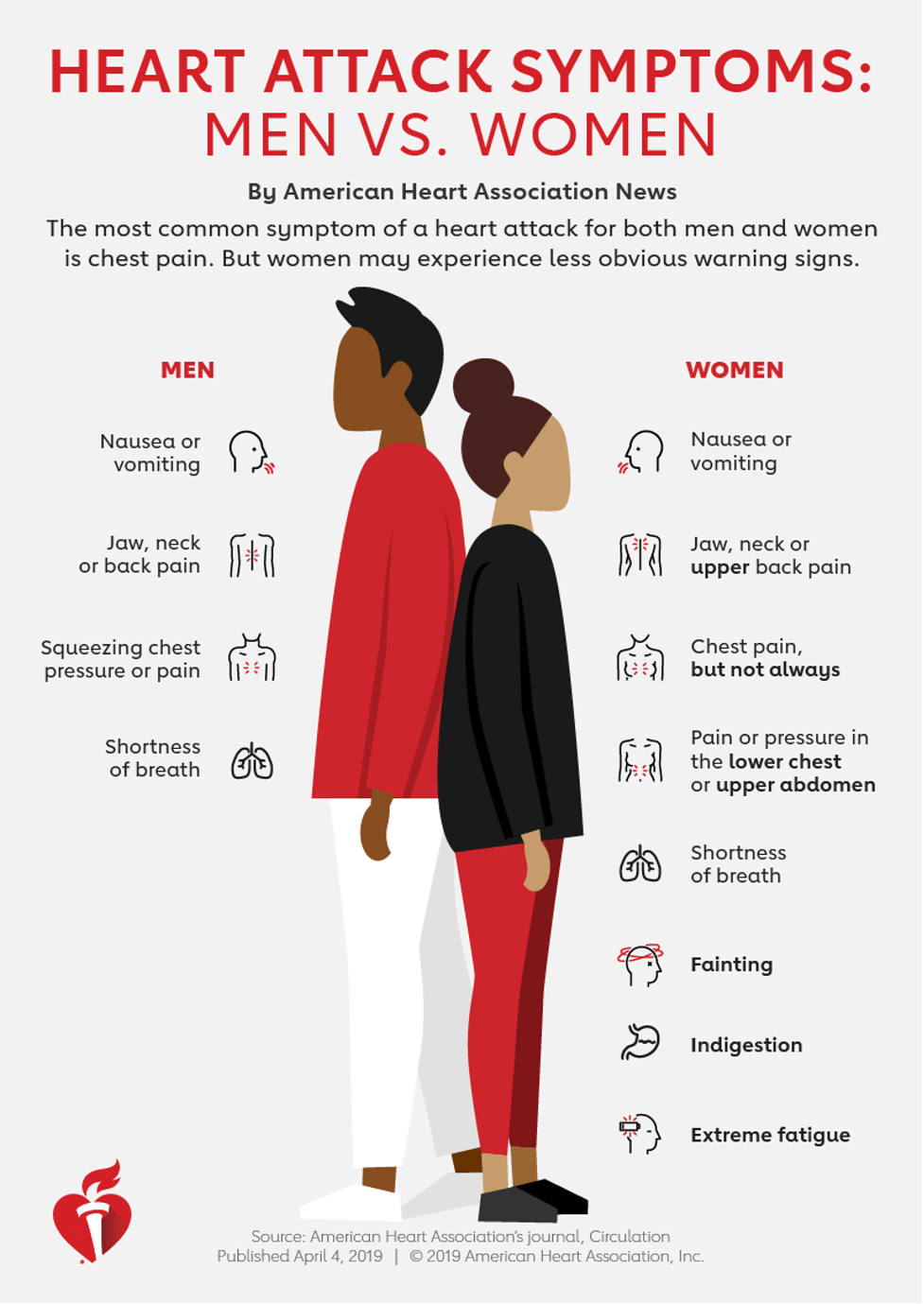
Women, older adults and people with diabetes are more likely to have subtle symptoms such as fatigue, breathlessness or indigestion-like discomfort. Read our guide to women’s heart attack symptoms, and see the American Heart Association’s warning signs of a heart attack.

What to do: Call 911. Chew an aspirin if the dispatcher advises it. Don’t drive yourself to the hospital.
                 Heart Attack | Pauley Heart Center | VCU Health

2. Sudden Cardiac Arrest

Sudden cardiac arrest occurs when the heart’s electrical system malfunctions and the heart suddenly stops pumping blood. It’s not the same as a heart attack, although a heart attack can trigger it. About 350,000 cardiac arrests occur outside the hospital in the U.S. each year, and about 90% are fatal, according to the American Heart Association.

Warning signs:

  • Sudden collapse
  • No response when you tap the person’s shoulder and shout
  • No normal breathing, or only gasping

What to do: Every second counts. Call 911, start hands-only CPR by pushing hard and fast in the center of the chest, and use an AED as soon as one is available. Immediate CPR can double or even triple a person’s chance of survival. Learn the difference between a heart attack and cardiac arrest.

3. Life-Threatening Cardiac Arrhythmias

Some abnormal heart rhythms are so fast or so slow that the heart can’t pump enough blood:

  • Ventricular tachycardia (VT): a very fast rhythm starting in the heart’s lower chambers. It can cause fainting and may progress to cardiac arrest.
  • Ventricular fibrillation (VF): a chaotic rhythm in which the heart quivers instead of pumping. VF is the most common cause of sudden cardiac arrest and needs immediate defibrillation.
  • Unstable slow rhythms (bradyarrhythmias): such as complete heart block, in which electrical signals don’t reach the lower chambers, causing a dangerously slow heart rate.

Warning signs:

  • Fainting or nearly fainting, especially without warning or during exercise
  • A racing, pounding or very slow heartbeat with dizziness
  • Chest pain or shortness of breath with palpitations
  • Confusion or extreme weakness

What to do: Call 911 for fainting, palpitations with chest pain or breathlessness, or a heart rate that’s extremely fast or slow with symptoms. If the person collapses and isn’t breathing normally, start CPR and use an AED.  For witnessed ventricular fibrillation arrest, survival decreases approximately 7–10% per minute without CPR or defibrillation. 

4. Acute Aortic Dissection

The aorta is the body’s largest artery. In an aortic dissection, a tear forms in its inner wall, and blood forces the layers apart. A dissection can rupture the aorta or cut off blood flow to the brain, heart, kidneys, intestines or limbs. The American Heart Association calls it often fatal without rapid treatment, and many patients need emergency surgery.

Warning signs:

  • Sudden, severe chest or upper back pain, often described as tearing or ripping
  • Pain that moves from the chest to the back or abdomen
  • Fainting or sudden shortness of breath
  • Stroke-like symptoms, such as weakness, numbness or trouble speaking
  • A weak or absent pulse in one arm or leg, or a large difference in blood pressure between the arms

High blood pressure is the leading preventable risk factor. People with Marfan syndrome, a family history of aortic disease, or a known aortic aneurysm are also at higher risk. Learn more about aortic dissection from Cleveland Clinic.

What to do: Call 911. Aortic dissection can be mistaken for a heart attack, so tell emergency responders if the pain is tearing or moves to your back.


5. Acute Decompensated Heart Failure With Pulmonary Edema

In heart failure, the heart can’t pump or fill as well as it should. Sometimes it worsens suddenly, and fluid backs up into the lungs. This is called pulmonary edema, and it makes breathing extremely difficult while oxygen levels fall.

Warning signs:

  • Severe shortness of breath, especially when lying flat
  • Waking up at night gasping for air
  • Coughing up frothy or pink-tinged mucus
  • Rapid breathing, a feeling of suffocating or drowning
  • Bluish lips or fingertips, anxiety or confusion

Earlier warning signs often appear days before a crisis, including rapid weight gain, increasing leg swelling and needing more pillows to sleep. Review the warning signs of heart failure from the American Heart Association.

What to do: Call 911 for severe breathlessness or breathing trouble at rest. Sit upright while you wait. For gradual weight gain or swelling, call your cardiologist the same day before it becomes an emergency.

6. Massive Pulmonary Embolism

A pulmonary embolism (PE) is a blood clot that travels to the lungs, usually from a deep vein in the leg. A large clot can block blood flow through the lungs and suddenly overload the right side of the heart, causing it to fail. Although PE begins in the lungs’ blood vessels, a massive PE is a true cardiac emergency.

Warning signs:

  • Sudden shortness of breath
  • Chest pain that’s sharp and worse with a deep breath
  • Fainting or feeling lightheaded
  • A rapid heartbeat
  • Coughing up blood
  • Collapse or signs of shock, such as pale, clammy skin

Risk is higher after surgery, a long hospital stay, long travel, cancer, pregnancy or a previous clot. Swelling, pain or warmth in one leg can be a sign of the clot before it travels. Learn more about blood clots from CDC, and read our post on poor circulation in your legs.

What to do: Call 911 for sudden breathlessness, chest pain, or fainting. Treatment may include blood thinners, clot-dissolving medication or a catheter procedure to remove the clot.

                                                                  Pulmonary embolism | Beacon Health System

7. Cardiac Tamponade

The heart sits inside a thin sac called the pericardium. In cardiac tamponade, fluid or blood builds up in this sac and squeezes the heart so it can’t fill properly. Blood pressure falls, and the heart races to compensate. Without treatment, tamponade can lead to shock and death.

Tamponade can be caused by cancer, kidney failure, infection or inflammation of the pericardium, chest injury, aortic dissection, or rarely a complication of a heart procedure.

Warning signs:

  • Shortness of breath that’s getting worse
  • Chest pain or pressure
  • A rapid heartbeat
  • Lightheadedness, fainting or feeling faint when sitting up
  • Swollen neck veins
  • Confusion, extreme fatigue or cool, clammy skin

What to do: Call 911. Doctors diagnose tamponade quickly with an echocardiogram, an ultrasound of the heart, and treat it by draining the fluid with a needle (pericardiocentesis) or surgery (pericardial window).

                                                                                Hemopericardium - Wikipedia

Frequently Asked Questions

How do I know if chest pain is an emergency? Treat chest pain as an emergency if it’s new, severe, lasts more than a few minutes, or comes with shortness of breath, sweating, nausea, fainting or pain spreading to your arm, jaw or back. When in doubt, call 911. Emergency teams would much rather evaluate a false alarm than see you arrive too late.

What’s the difference between a heart attack and cardiac arrest? A heart attack is a blockage of blood flow to the heart muscle; the person is usually awake and talking. Cardiac arrest is an electrical problem in which the heart suddenly stops pumping; the person collapses and stops breathing normally. A heart attack can trigger cardiac arrest.

Should I drive myself to the hospital if I think I’m having a heart attack? No. Call 911. Paramedics can begin treatment on the way, perform an ECG and alert the hospital’s cardiac team so treatment starts the moment you arrive. If your heart stops, they can resuscitate you.

Can young, healthy people have cardiac emergencies? Yes. Inherited heart conditions, rhythm disorders, myocarditis and spontaneous coronary artery dissection can affect young people, including athletes. Fainting during exercise is never normal. Read our post on athlete’s heart and when to worry.

How can I lower my risk of a cardiac emergency? Control blood pressure, cholesterol and blood sugar; don’t smoke; stay active; and keep regular checkups. If you have symptoms such as chest discomfort, breathlessness or palpitations, see a cardiologist before they become an emergency. Review the 10 warning signs you should see a cardiologist.

Prevention Starts Before the Emergency

Many cardiac emergencies can be prevented, or caught early, with the right care. Our board-certified interventional cardiologist provides comprehensive heart evaluations, advanced echocardiography, and emergency procedures at Tampa General Hospital and St. Joseph’s Hospital. If you have symptoms, risk factors, or a family history of heart disease, schedule an evaluation today.

Request an appointment or call (813) 540-4322.

602 S Audubon Ave, Suite A, Tampa, FL 33609

Medical Disclaimer

The content provided on the Ascent Cardiology website is intended for general educational and informational purposes only. The information, articles, and media presented on this website do not constitute medical advice, diagnosis, or treatment recommendations. Content published on this website is not intended to replace consultation, evaluation, or treatment by qualified healthcare professionals, including the providers at Ascent Cardiology or other licensed medical professionals.

If you believe you may be experiencing a medical emergency, call 911 or seek immediate emergency medical care.

The medical information, opinions, and educational materials presented on this website are provided for general awareness and may not reflect the specific clinical practices or medical opinions of Ascent Cardiology or its providers. Reliance on any information provided on this website is solely at your own risk.

This website may include links to third-party medical or educational websites for informational purposes only. Ascent Cardiology does not control, endorse, or assume responsibility for the accuracy, reliability, or content of any third-party websites linked from this site.

Sources