Coronary Artery Disease: 10 Warning Signs You Should Never Ignore
Coronary artery disease (CAD) is the most common form of heart disease and the main cause of heart attacks. Yet its warning signs are often subtle, easy to explain away, or missing entirely until a heart attack strikes. Knowing the coronary artery disease warning signs, and acting on them early, can save your heart muscle and your life.
According to the American Heart Association’s 2025 statistics, cardiovascular disease remains the leading cause of death in the United States, and coronary heart disease accounts for about 40% of those deaths.
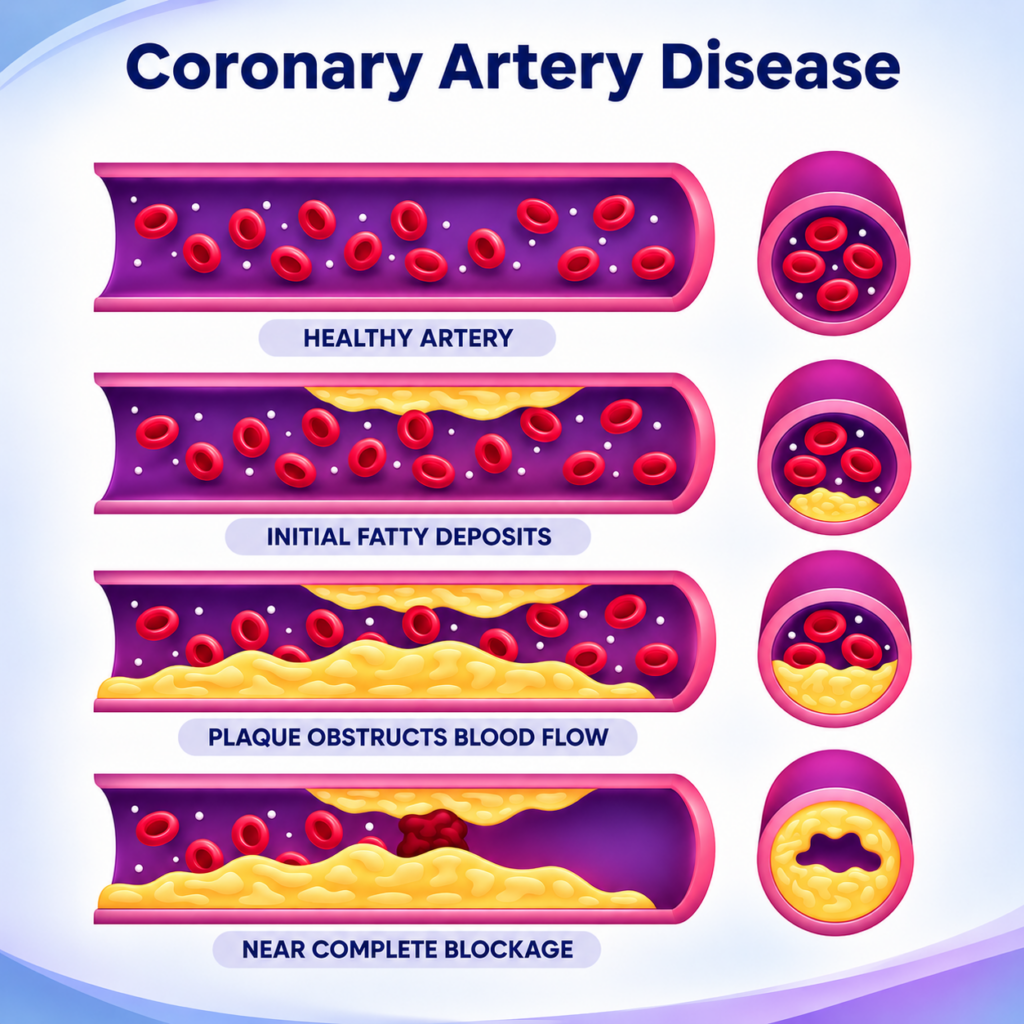
Coronary artery disease develops when cholesterol-rich plaque builds up inside the arteries that supply blood to the heart muscle, a process called atherosclerosis. Over years, plaque can narrow the arteries and limit blood flow, especially when the heart needs more oxygen, such as during exercise or stress.
Plaque can also crack or rupture. A blood clot then forms on top of it and can suddenly block the artery, causing a heart attack. That is why some people have no warning at all before a heart attack.
Why Coronary Artery Disease Warning Signs Are Often Missed
The National Heart, Lung, and Blood Institute notes that coronary heart disease may cause no symptoms until a heart attack or other complication occurs. When symptoms do appear, they are often mistaken for indigestion, a pulled muscle, aging, stress or being out of shape. Women, older adults and people with diabetes are especially likely to have atypical symptoms.
10 Coronary Artery Disease Warning Signs You Should Never Ignore
1. Chest Pressure or Discomfort With Activity (Angina)
The classic sign of coronary artery disease is angina: pressure, squeezing, tightness, heaviness or burning in the chest. It often comes on with exertion, such as climbing stairs or walking briskly, or with emotional stress, and eases with rest. Many people don’t describe it as “pain” at all.
2. Pain That Spreads to the Arm, Shoulder, Neck, Jaw or Back
Heart-related discomfort can spread, or show up only in these areas. The NHLBI notes that angina may spread to the shoulders, arms, neck, jaw or back. Jaw or arm discomfort that comes with activity and goes away with rest deserves attention.
3. Shortness of Breath
Breathlessness during activities you used to handle easily can be the main or only sign of reduced blood flow to the heart, especially in women, older adults and people with diabetes.
4. Unusual Fatigue
Extreme or unexplained tiredness, especially if it’s new and limits your normal activities, can be an early sign. The NHLBI notes that women more often report extreme tiredness during a heart attack.
5. Indigestion, Nausea or Upper Stomach Discomfort
Heart symptoms can feel like heartburn or an upset stomach. Be suspicious if “indigestion” comes on with exertion, doesn’t respond to antacids, or comes with breathlessness or sweating.
6. Cold Sweats
Breaking into a cold sweat without a clear reason, particularly with chest discomfort or breathlessness, is a warning sign of a heart attack.
7. Dizziness, Lightheadedness or Fainting
Feeling faint or passing out can signal reduced blood flow or a dangerous heart rhythm triggered by a blocked artery. Fainting during exertion always needs prompt evaluation.
8. Symptoms That Come With Less Effort or at Rest
A change in pattern is a red flag. If chest discomfort now comes on with less activity, lasts longer, or happens at rest, it may be unstable angina, a warning that a heart attack may be near. This needs same-day medical attention or a 911 call.
9. Leg Pain When Walking
Cramping or aching in the calves, thighs or buttocks that comes on with walking and eases with rest may be peripheral artery disease. Plaque in the legs often means plaque in the heart arteries too. Read more about poor circulation in your legs.
10. Erectile Dysfunction
In men, erectile dysfunction can be an early sign of artery disease, because the small arteries involved may narrow before the larger heart arteries. New erectile dysfunction, especially with other risk factors, is a good reason for a heart risk check. See testosterone and heart disease.
The Silent Threat: No Symptoms at All
Some people have no symptoms until a heart attack. Others have a “silent” heart attack and never know it. According to the American Heart Association’s Go Red for Women, a silent heart attack may cause no symptoms, minimal symptoms, or symptoms that feel like indigestion, the flu or a strained chest muscle. It may only be discovered later on an ECG or imaging test. That is why knowing your risk factors matters as much as knowing the symptoms. Women can read more in heart disease in women: 10 warning signs.
Call 911 or Call Your Doctor? Know the Difference
| Situation | What it may mean | What to do |
|---|---|---|
| Chest pressure or pain lasting more than a few minutes, or at rest | Possible heart attack or unstable angina | Call 911 now |
| Chest discomfort with sweating, nausea, breathlessness or fainting | Possible heart attack | Call 911 now |
| Angina that is new, more frequent, or comes with less effort | Unstable angina, high risk of heart attack | Call 911 or seek same-day emergency care |
| Chest discomfort with exertion that goes away with rest, same pattern for weeks | Stable angina | See a cardiologist promptly, within days |
| Gradually worsening breathlessness or fatigue with activity | Possible coronary artery disease or heart failure | Schedule a cardiology evaluation |
| Leg pain with walking or new erectile dysfunction | Possible artery disease elsewhere in the body | Ask for a heart and vascular risk check |
The NHLBI’s advice is simple: if you can’t tell whether your chest pain is a heart attack, call 911 right away. Don’t drive yourself to the hospital. Paramedics can begin treatment on the way. Learn more about cardiac emergencies you should never ignore.
Are You at Risk for Coronary Artery Disease?
Warning signs matter more when you have risk factors. The major ones include:
- High blood pressure
- High LDL cholesterol or high lipoprotein(a)
- Diabetes or prediabetes
- Smoking or vaping
- A family history of early heart disease (father or brother before 55, mother or sister before 65)
- Overweight, especially around the waist
- Physical inactivity
- Chronic kidney disease
- Autoimmune conditions such as lupus, rheumatoid arthritis and psoriasis (see autoimmune disease and heart disease)
- Pregnancy complications such as preeclampsia, and early menopause
How Coronary Artery Disease Is Diagnosed
Depending on your symptoms and risk, your cardiologist may recommend:
- ECG: checks the heart’s electrical activity and signs of a prior heart attack
- Stress test: shows how the heart responds to exercise, with or without imaging
- Echocardiogram: an ultrasound of the heart’s pumping and valves
- Coronary artery calcium (CAC) score: a quick CT scan that measures calcified plaque
- Coronary CT angiography: a detailed CT image of the heart arteries
- Cardiac catheterization: an X-ray dye test that shows blockages directly and allows treatment during the same procedure

Treatment Options
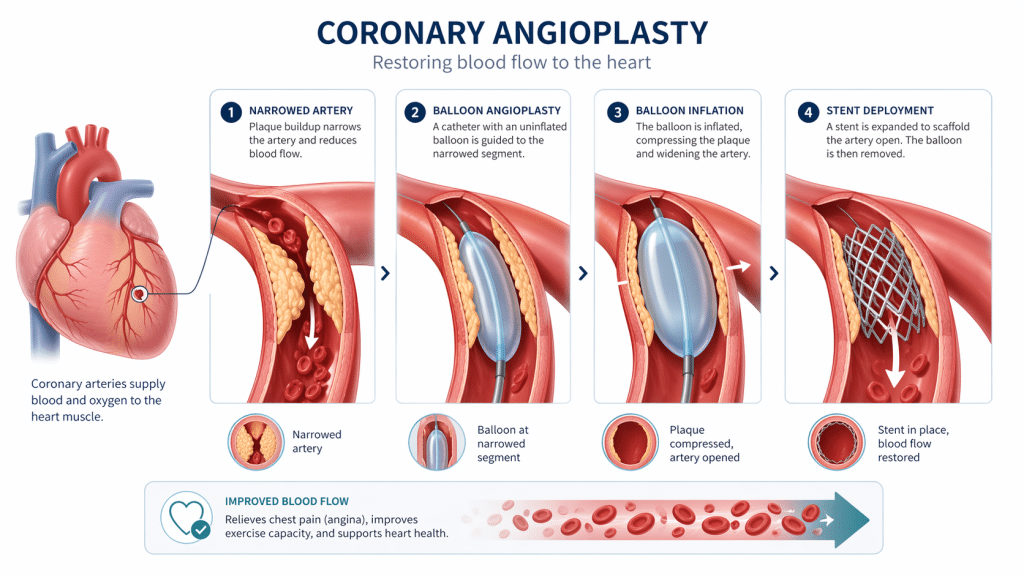
Most people with coronary artery disease are treated with lifestyle changes and medications that lower cholesterol, control blood pressure, prevent clots and relieve angina. When blockages cause persistent symptoms or a heart attack, an interventional cardiologist may open the artery with a stent, or bypass surgery may be recommended. Read the truth about coronary stents and the truth about heart medications.
Coronary Artery Disease FAQ
What is the first sign of coronary artery disease? For many people, it is chest pressure or tightness during exertion that eases with rest. For others, the first sign is shortness of breath, unusual fatigue, or, unfortunately, a heart attack.
Can you have coronary artery disease with a normal ECG? Yes. A resting ECG is often normal between episodes. Stress testing, a calcium score or coronary CT angiography may be needed to find the disease.
Are coronary artery disease symptoms different in women? They can be. Women are somewhat less likely to have chest pain during a heart attack and more likely to report breathlessness, extreme fatigue, nausea or stomach discomfort.
Can coronary artery disease be reversed? Plaque can stabilize and, in some cases, shrink modestly with intensive cholesterol lowering and healthy habits. Treatment greatly lowers the risk of heart attack even when plaque remains.
Who should be screened for coronary artery disease? Adults with risk factors such as high blood pressure, high cholesterol, diabetes, smoking or a family history should talk with their doctor about their 10-year risk. A coronary calcium score can help clarify risk for many people.
Coronary Artery Disease Care in Tampa
At Ascent Cardiology, an interventional cardiologist evaluates your symptoms, assesses your risk, and builds a plan that may include advanced testing, medications or, when needed, stenting at Tampa General Hospital or St. Joseph's Hospital. As an independent practice, you see the same physician at every visit.
Not sure if your symptoms need a visit? See our 10 warning signs you should see a cardiologist.
Request an appointment or call (813) 540-4322.
602 S Audubon Ave, Suite A, Tampa, FL 33609Medical Disclaimer
The content provided on the Ascent Cardiology website is intended for general educational and informational purposes only. The information, articles, and media presented on this website do not constitute medical advice, diagnosis, or treatment recommendations. Content published on this website is not intended to replace consultation, evaluation, or treatment by qualified healthcare professionals, including the providers at Ascent Cardiology or other licensed medical professionals.
If you believe you may be experiencing a medical emergency, call 911 or seek immediate emergency medical care.
The medical information, opinions, and educational materials presented on this website are provided for general awareness and may not reflect the specific clinical practices or medical opinions of Ascent Cardiology or its providers. Reliance on any information provided on this website is solely at your own risk.
This website may include links to third-party medical or educational websites for informational purposes only. Ascent Cardiology does not control, endorse, or assume responsibility for the accuracy, reliability, or content of any third-party websites linked from this site.
Sources