Heart Disease in Women: 10 Warning Signs You Should Never Ignore
Heart disease in women is the leading cause of death in the United States. In 2023, it claimed 304,970 women’s lives, about 1 in every 5 female deaths, according to the CDC. More than 60 million American women live with some form of heart disease. Yet only about 56% of women know it’s their number one health threat.
Part of the problem is that heart disease often looks different in women. Symptoms can be subtle, build slowly or be mistaken for stress, aging or menopause. Here are 10 warning signs every woman should know, the risk factors unique to women, and when to see a cardiologist.
Why Heart Disease in Women Is Often Missed
- Symptoms are less “classic.” Women are more likely to have fatigue, breathlessness, nausea or back and jaw pain rather than crushing chest pain.
- Different types of heart disease. Women more often have problems in the heart’s smallest arteries, which standard tests can miss.
- Women delay care. Many put family and work first, or downplay their symptoms.
- Research gaps. Women make up only about 38% of participants in cardiovascular clinical trials, according to Go Red for Women.
10 Warning Signs of Heart Disease in Women
1. Chest Discomfort That Doesn’t Feel Like “Chest Pain”
Chest discomfort is still the most common symptom, but in women it may feel like pressure, squeezing, fullness, burning, or a dull ache rather than sharp pain. It may come and go, or appear with activity or emotional stress and ease with rest.
2. Unusual or Extreme Fatigue
Feeling exhausted after ordinary activities, such as making the bed or walking to the mailbox, can be an early sign of heart disease. Many women report unusual fatigue in the weeks before a heart attack. If you’re suddenly more tired than usual and it doesn’t improve with rest, get it checked.
3. Shortness of Breath
Becoming winded with light activity, needing to stop on stairs you once climbed easily, or feeling short of breath when lying flat can signal coronary artery disease, heart failure or a valve problem.
4. Pain in the Jaw, Neck, Back or Arms
Women are more likely than men to feel heart-related pain outside the chest. It may be an ache between the shoulder blades, tightness in the jaw or throat, or heaviness in one or both arms. Unlike muscle pain, it often doesn’t change when you move or press on the area.
5. Nausea, Indigestion or Upper Abdominal Pain
Heartburn-like discomfort, nausea, vomiting, or pressure in the upper abdomen can be signs of a heart problem in women, and they’re easily mistaken for a stomach issue. If antacids don’t help, or the symptoms come with sweating, breathlessness or fatigue, take them seriously.
If any of these symptoms are sudden, severe or last more than a few minutes, call 911. They can be signs of a heart attack.
6. Heart Palpitations or a Fluttering Heartbeat
A racing, pounding, fluttering or irregular heartbeat can be harmless, but it can also signal atrial fibrillation or another rhythm problem that raises stroke risk. Palpitations that are frequent, last more than a few minutes, or come with dizziness or breathlessness deserve an evaluation.
7. Swelling in the Feet, Ankles, Legs or Abdomen
Fluid buildup can be a sign of heart failure, especially when it comes with breathlessness, fatigue or rapid weight gain. Swelling can also come from vein problems. Learn the difference in our post on poor circulation in your legs.
8. Dizziness, Lightheadedness or Fainting
Feeling faint, especially during exertion, can be caused by an abnormal heart rhythm, a narrowed heart valve, or reduced blood flow. Any unexplained fainting should be checked by a doctor.
9. Sleep Problems and Waking Up Short of Breath
New insomnia, waking up at night gasping for air, or needing extra pillows to breathe comfortably can be signs of heart failure. Loud snoring with pauses in breathing may indicate sleep apnea, which raises blood pressure and the risk of atrial fibrillation.
10. A History of Pregnancy Complications
Some warning signs aren’t symptoms at all. A history of preeclampsia, high blood pressure during pregnancy, gestational diabetes, preterm delivery or placental abruption signals a higher lifelong risk of heart disease, even decades later. Research reported by the American Heart Association found that women with pregnancy complications who later had poor heart-health scores had a 148% higher risk of cardiovascular disease than women with healthy scores and uncomplicated pregnancies. The encouraging finding: women who kept good heart-health habits had risk similar to women without complications.
If you’ve had a pregnancy complication, tell every doctor you see, not just your OB-GYN.
Heart Disease Risk Factors Unique to Women
Women share traditional risk factors with men, such as high blood pressure, high cholesterol, diabetes, smoking and family history. But several risks are unique to women or affect them more strongly:
| Life stage | Risk factor |
|---|---|
| Early life | First period before age 11 |
| Reproductive years | Polycystic ovary syndrome (PCOS) |
| Pregnancy | Preeclampsia, gestational hypertension, gestational diabetes, preterm delivery, very low or very high birth weight baby |
| Midlife | Early menopause, before age 40; rising blood pressure and cholesterol after menopause |
| Any age | Autoimmune diseases such as lupus and rheumatoid arthritis; depression and chronic stress; breast cancer treatment that can affect the heart |
High blood pressure deserves special attention. According to the CDC, nearly half of U.S. women have high blood pressure, but fewer than 1 in 4 of them have it under control. Learn how high blood pressure damages your body.
Diabetes raises heart disease risk even more in women than in men. Learn how diabetes affects your heart.
Heart Conditions More Common in Women
Some heart conditions are more common in women and are often missed:
- Coronary microvascular dysfunction: problems in the heart’s tiny arteries that cause chest pain even when a standard angiogram looks normal
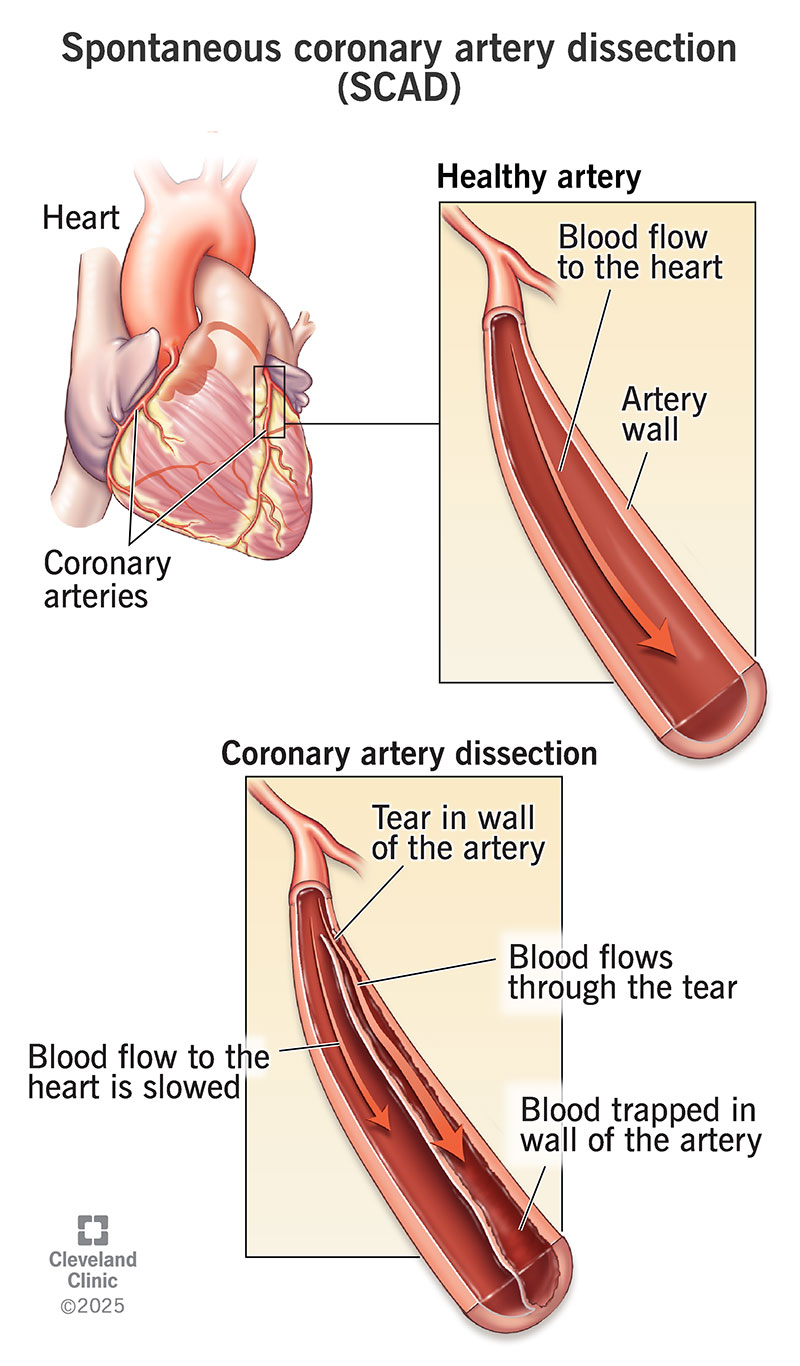
- Spontaneous coronary artery dissection (SCAD): a tear in a heart artery that most often affects women under 50, including during or after pregnancy
- Broken heart syndrome (takotsubo cardiomyopathy): a sudden weakening of the heart triggered by severe stress; about 90% of cases occur in women
- Heart failure with preserved ejection fraction: a stiff heart that doesn’t fill well, especially common in older women
Learn more in 5 lesser-known heart conditions and how stress affects your heart.
Screening and Prevention: What Every Woman Should Do
- Know your numbers: blood pressure, cholesterol, blood sugar and weight
- Share your full history with your doctor, including pregnancy complications, early menopause and autoimmune disease
- Ask about a coronary calcium scan if your risk is borderline or intermediate
- Stay active, aiming for at least 150 minutes of moderate activity a week. See our guide to heart-healthy exercises.
- Don’t smoke, limit alcohol and prioritize sleep
- Manage stress and get help for depression or anxiety
Frequently Asked Questions
What are the first signs of heart disease in women? Early signs are often subtle: unusual fatigue, shortness of breath with everyday activities, mild chest pressure, or discomfort in the jaw, back or upper abdomen. Many women have no symptoms at all, which is why knowing your risk factors and numbers is so important.
At what age should women worry about heart disease? Heart disease can affect women at any age. Risk rises after menopause, but younger women can develop it too, especially those with diabetes, high blood pressure, pregnancy complications, PCOS, autoimmune disease, or a family history.
Does menopause increase heart disease risk? Yes. After menopause, blood pressure, LDL cholesterol, and abdominal fat tend to rise. Women who go through menopause before age 40 have a higher risk and should talk with their doctor about heart screening.
Can a normal stress test or angiogram miss heart disease in women? Yes. Women are more likely to have coronary microvascular dysfunction, which affects small arteries that standard tests may not show. If you have ongoing symptoms despite “normal” tests, ask about specialized testing.
Should I see a cardiologist if I had preeclampsia? It’s a good idea to have your heart risk assessed, especially if you also have high blood pressure, diabetes, or high cholesterol. Regular checkups and healthy habits can bring your risk back down.
Women's Heart Care in Tampa
You know your body best. If something doesn’t feel right, don’t let anyone, including yourself, dismiss it. Our board-certified cardiologist takes women’s symptoms seriously and considers the full picture, including pregnancy history, menopause, and other women-specific risk factors. We offer comprehensive evaluations, personalized prevention plans, and state-of-the-art diagnostic testing.
Not sure if your symptoms need a specialist? See the 10 warning signs you should see a cardiologist.
Request an appointment or call (813) 540-4322.
602 S Audubon Ave, Suite A, Tampa, FL 33609
Medical Disclaimer
The content provided on the Ascent Cardiology website is intended for general educational and informational purposes only. The information, articles, and media presented on this website do not constitute medical advice, diagnosis, or treatment recommendations. Content published on this website is not intended to replace consultation, evaluation, or treatment by qualified healthcare professionals, including the providers at Ascent Cardiology or other licensed medical professionals.
If you believe you may be experiencing a medical emergency, call 911 or seek immediate emergency medical care.
The medical information, opinions, and educational materials presented on this website are provided for general awareness and may not reflect the specific clinical practices or medical opinions of Ascent Cardiology or its providers. Reliance on any information provided on this website is solely at your own risk.
This website may include links to third-party medical or educational websites for informational purposes only. Ascent Cardiology does not control, endorse, or assume responsibility for the accuracy, reliability, or content of any third-party websites linked from this site.
Sources