Menopause and Heart Disease: 7 Hidden Risks Every Woman Should Know
Hot flashes, night sweats, and mood changes get most of the attention during menopause. But some of the most important changes happen where you can’t see or feel them: in your heart and blood vessels. The link between menopause and heart disease is strong. Before menopause, women develop heart disease about a decade later than men, on average. After menopause, that gap begins to close.
The American Heart Association calls the menopause transition a time of rising cardiovascular risk and an important window for prevention. Here are seven hidden risks every woman should know, and what you can do about each one.
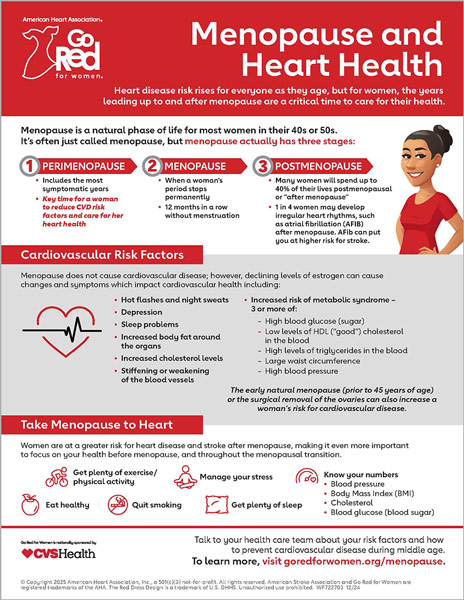
1. Declining Estrogen and Changes in Blood Vessel Function
Estrogen helps keep blood vessels healthy. It supports the inner lining of the arteries (the endothelium) in producing nitric oxide, which helps vessels relax and widen. It also has anti-inflammatory effects and helps keep arteries flexible.
As estrogen falls during perimenopause and menopause, blood vessels become stiffer and less able to dilate. Endothelial function declines, and inflammation can increase. These changes make it easier for plaque to form and for blood pressure to rise, often years before any symptoms appear.
2. Rising LDL Cholesterol and Changes in Lipid Metabolism
Many women are surprised when their cholesterol jumps after years of normal readings. Research from the long-running Study of Women’s Health Across the Nation (SWAN) found that LDL (“bad”) cholesterol and triglycerides peak during late perimenopause and early postmenopause, with the sharpest rise around the final menstrual period.
Other changes include:
- Lipoprotein(a), an inherited, plaque-promoting cholesterol particle, may rise after menopause
- HDL (“good”) cholesterol may become less protective, even if the number doesn’t fall
- Smaller, denser LDL particles, which more easily enter artery walls, become more common
If your cholesterol is rising, a statin or other medication may be recommended based on your overall risk. Read statin myths vs. facts.
3. Rising Blood Pressure During Midlife
Blood pressure tends to climb during the menopause transition. Research cited by the AHA found that both systolic and diastolic blood pressure rise significantly between the early and late stages of the transition, and the share of women with high blood pressure increases too. Stiffer arteries, weight gain, changes in salt sensitivity and poorer sleep all contribute.
High blood pressure usually causes no symptoms, so regular checks are essential. Learn how high blood pressure damages your body.
4. Increased Abdominal Fat and Metabolic Syndrome
Even without gaining weight, many women notice their shape changes during menopause. Lower estrogen shifts fat storage from the hips and thighs to the abdomen. This deeper belly fat, called visceral fat, surrounds the organs and releases inflammatory substances that harm the heart and blood vessels.
Visceral fat is a key driver of metabolic syndrome, a cluster of conditions that sharply raises heart disease risk. You have metabolic syndrome if you have three or more of the following:
- A large waist (35 inches or more for most women)
- High triglycerides
- Low HDL cholesterol
- High blood pressure
- High fasting blood sugar
Tracking your waist size can be more revealing than the number on the scale.
5. Insulin Resistance and Higher Type 2 Diabetes Risk
Falling estrogen and rising visceral fat make the body less responsive to insulin. Blood sugar creeps up, and the risk of prediabetes and type 2 diabetes increases. An AHA study of more than 9,000 women found that perimenopausal women were 83% more likely to have a low blood sugar score on the AHA’s Life’s Essential 8 heart-health measure than premenopausal women.
This matters because diabetes raises heart disease risk even more in women than in men. Learn how diabetes affects your heart.
6. Sleep Disturbances and Their Effects on the Heart
Night sweats, hot flashes, anxiety and frequent waking can make restful sleep hard to come by during menopause. The risk of obstructive sleep apnea also rises after menopause, though it’s often overlooked in women.
Poor sleep isn’t just exhausting. It raises blood pressure, worsens insulin resistance, increases appetite and inflammation, and is linked to a higher risk of heart disease and atrial fibrillation. Research also suggests that frequent or severe hot flashes, particularly when they start early, may be associated with higher cardiovascular risk.
Signs worth mentioning to your doctor: loud snoring, pauses in breathing, waking up gasping, morning headaches or daytime sleepiness, and heart palpitations at night.
7. Accelerated Atherosclerosis With Early or Premature Menopause
The average age of natural menopause in the U.S. is about 50. Menopause before age 45 is considered early, and before age 40 is premature. Women who go through menopause early lose estrogen’s protective effects sooner, giving plaque more years to build.
Research presented at an American Heart Association conference found that women who reached natural menopause before age 40 had a 40% higher lifetime risk of coronary heart disease, even after accounting for smoking, high blood pressure, diabetes and obesity. Meta-analyses also link menopause before 45 to higher rates of coronary heart disease and heart failure. Surgical menopause, from removal of both ovaries, can carry similar risks.
Cardiology guidelines recognize premature menopause as a risk-enhancing factor when deciding whether to start cholesterol-lowering treatment. If you went through menopause early, tell your doctor and ask about a heart risk assessment.
Menopause at a Glance: What Changes and What to Check
| Hidden risk | What happens | What to check |
|---|---|---|
| Declining estrogen | Stiffer, less flexible arteries | Blood pressure, overall heart risk |
| Cholesterol changes | LDL and triglycerides rise | Lipid panel, lipoprotein(a) once |
| Rising blood pressure | Higher readings in midlife | Home and office blood pressure |
| Abdominal fat | Fat shifts to the belly | Waist size, metabolic syndrome |
| Insulin resistance | Blood sugar creeps up | Fasting glucose or A1C |
| Sleep problems | Poor sleep, sleep apnea | Sleep evaluation if symptoms |
| Early menopause | Earlier plaque buildup | Risk assessment, coronary calcium scan |
Does Hormone Therapy Protect the Heart?
This is one of the most common questions we hear. In November 2025, the FDA announced it would remove the boxed “black box” warnings from most menopausal hormone therapy products, and add guidance that women who start treatment within 10 years of menopause may gain long-term benefits. A boxed warning for endometrial cancer remains on estrogen-only products.
What this means for your heart:
- Timing matters. For many healthy women in their 50s, or within 10 years of menopause, the benefits of hormone therapy for symptoms often outweigh the risks.
- It’s prescribed for symptoms, such as hot flashes, night sweats, and sleep disruption, not as a primary way to prevent heart disease.
- It isn’t right for everyone. Women with a prior heart attack, stroke, blood clots, or certain cancers usually aren’t candidates for systemic hormone therapy.
- Non-hormonal options are available for women who can’t or prefer not to take hormones.
The decision should be personal and made with your primary care doctor, gynecologist, endocrinologist, and, if you have heart disease or risk factors, your cardiologist.
How to Protect Your Heart Through Menopause
Research shows that healthy habits during the menopause transition can prevent much of the rise in cholesterol, blood pressure and weight. The AHA calls this period a “window of opportunity.”
- Know your numbers: blood pressure, cholesterol, lipoprotein(a), blood sugar and waist size
- Move more: at least 150 minutes of moderate activity a week, plus strength training twice a week to protect muscle and metabolism. See heart-healthy exercises.
- Eat for your heart: a Mediterranean- or DASH-style diet with less salt, sugar and processed food
- Prioritize sleep and get evaluated for sleep apnea if you snore or wake unrested
- Don’t smoke and limit alcohol
- Manage stress. Learn how stress affects your heart.
- Ask about a coronary calcium scan if your risk is borderline or intermediate, especially after early menopause
Frequently Asked Questions
Does menopause cause heart disease? Menopause doesn’t directly cause heart disease, but the hormonal changes that come with it raise cholesterol, blood pressure, belly fat and blood sugar. Together, these changes speed up plaque buildup and increase risk, especially for women who already have other risk factors.
Why does my cholesterol go up after menopause? Estrogen helps the liver clear LDL cholesterol from the blood. As estrogen falls, LDL and triglycerides tend to rise, often sharply around the final menstrual period. Diet and exercise help, but some women need medication.
Are heart palpitations during menopause normal? Palpitations are common during perimenopause and are often harmless, especially during hot flashes. However, see a doctor if they’re frequent, last more than a few minutes, or come with dizziness, chest pain, shortness of breath or fainting, since they can also signal atrial fibrillation.
Should I take hormone therapy to protect my heart? Hormone therapy is prescribed to relieve menopause symptoms, not primarily to prevent heart disease. For many healthy women who start it before age 60 or within 10 years of menopause, the benefits often outweigh the risks. Talk with your doctors about your personal risk.
I went through menopause early. What should I do? Tell your doctor, since early menopause is a recognized risk-enhancing factor for heart disease. Ask about a full heart risk assessment, including cholesterol, lipoprotein(a), blood pressure, blood sugar and possibly a coronary calcium scan.
Midlife Heart Care for Women in Tampa
Menopause is the right time to take a fresh look at your heart health. Our board-certified cardiologist offers comprehensive risk assessments for women in midlife, considering menopause timing, pregnancy history, and other women-specific factors, and works with your gynecologist and primary care doctor to build a personalized prevention plan.
Learn more about heart disease in women and the 10 warning signs you should see a cardiologist.
Request an appointment or call (813) 540-4322.
602 S Audubon Ave, Suite A, Tampa, FL 33609
Medical Disclaimer
The content provided on the Ascent Cardiology website is intended for general educational and informational purposes only. The information, articles, and media presented on this website do not constitute medical advice, diagnosis, or treatment recommendations. Content published on this website is not intended to replace consultation, evaluation, or treatment by qualified healthcare professionals, including the providers at Ascent Cardiology or other licensed medical professionals.
If you believe you may be experiencing a medical emergency, call 911 or seek immediate emergency medical care.
The medical information, opinions, and educational materials presented on this website are provided for general awareness and may not reflect the specific clinical practices or medical opinions of Ascent Cardiology or its providers. Reliance on any information provided on this website is solely at your own risk.
This website may include links to third-party medical or educational websites for informational purposes only. Ascent Cardiology does not control, endorse, or assume responsibility for the accuracy, reliability, or content of any third-party websites linked from this site.
Sources
- Menopause Transition and Cardiovascular Health: Time Matters — American Heart Association, Professional Heart Daily
- Menopause Transition and Cardiovascular Disease Risk: A Scientific Statement From the American Heart Association — Circulation (2020)
- Perimenopause May Offer a “Window of Opportunity” for Heart Disease Prevention in Women — American Heart Association Newsroom
- Early Menopause Linked to Higher Risk of Future Coronary Heart Disease — American Heart Association Newsroom (2021)
- FDA Removes Menopause Hormone Therapy Black Box Warnings — Harvard Health Publishing