Varicose Vein Treatment: RFA vs. VenaSeal – 7 Things You Should Know
Aching, heavy legs. Swelling by the end of the day. Bulging, twisted veins you’d rather hide in shorts weather. If this sounds familiar, you’re not alone, and modern varicose vein treatment no longer means surgery, hospital stays or weeks off your feet.
Today, two of the most common minimally invasive options are radiofrequency ablation (RFA) and VenaSeal™, a medical adhesive closure system. Both are done in the office in under an hour, both use ultrasound guidance and a single small needle entry, and both have strong long-term results. But they work differently, and the differences can matter for you.
What Causes Varicose Veins?
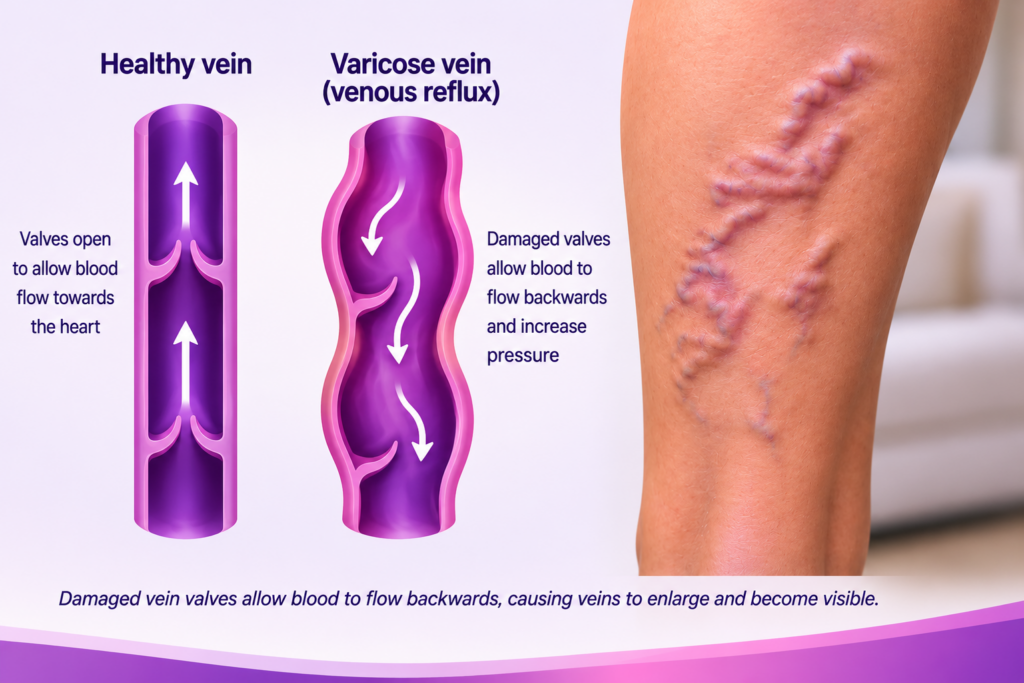
Leg veins contain one-way valves that keep blood flowing up toward the heart. When those valves weaken, blood leaks backward and pools in the leg, a condition called venous reflux or chronic venous insufficiency. Over time, pressure builds and surface veins stretch into varicose veins.
The source is often a large vein just under the skin, most commonly the great saphenous vein. Effective varicose vein treatment closes that faulty vein so blood reroutes through healthy veins. A duplex ultrasound shows exactly which veins are leaking. Learn more in our post on the warning signs of poor circulation in your legs.
How RFA and VenaSeal Work
Radiofrequency ablation (RFA) uses heat. A thin catheter is guided into the diseased vein through a small needle entry. The physician first injects a numbing solution, called tumescent anesthesia, along the vein. The catheter then heats the vein wall in segments, causing it to collapse and seal.

VenaSeal uses a medical-grade adhesive. A catheter delivers small amounts of cyanoacrylate glue along the vein while gentle pressure is applied over the skin, sealing the vein closed. No heat is used, so the tumescent injections are not needed. The FDA approved the VenaSeal Closure System in February 2015 for adults with symptomatic venous reflux confirmed by duplex ultrasound.
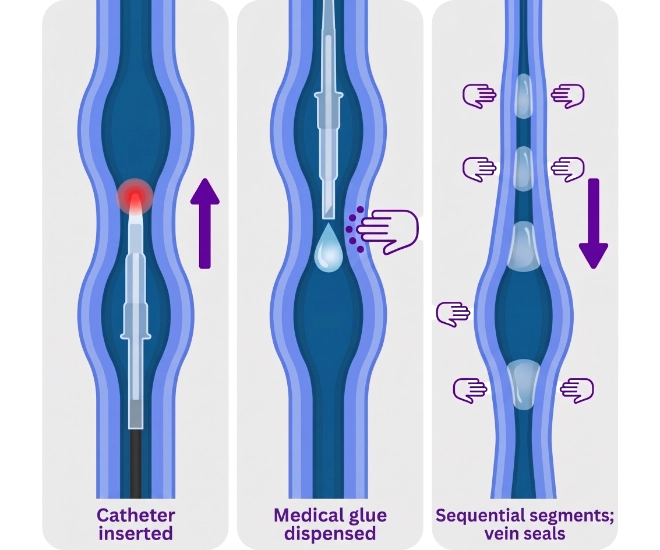
With either method, the body gradually absorbs the closed vein, and blood flows through healthier veins instead.
RFA vs. VenaSeal: 7 Things You Should Know
1. Both Are Highly Effective, Long-Term Varicose Vein Treatments
The most important point: both procedures work. In the VeClose randomized trial, which compared VenaSeal head-to-head with RFA, 5-year closure rates were 91.4% for VenaSeal and 85.2% for RFA, and VenaSeal was shown to be non-inferior. Patients in both groups had lasting improvement in symptoms and quality of life. RFA has an even longer track record, with many years of use worldwide.
2. VenaSeal Usually Means Fewer Needle Sticks
Because RFA uses heat, the vein must first be surrounded by tumescent anesthesia, delivered through a series of small injections along the leg. This protects the surrounding tissue and numbs the area. VenaSeal uses no heat, so it typically needs only one numbing injection at the catheter entry site. For patients anxious about needles, that difference can matter.
3. Heat vs. No Heat Can Matter Near Nerves
Some veins, especially below the knee and the small saphenous vein in the calf, run close to sensory nerves. Heat-based treatment in these areas carries a small risk of temporary numbness or tingling. A non-thermal option like VenaSeal avoids heat-related injury, which may make it attractive for certain veins. Your physician will consider your vein anatomy on ultrasound.
4. Recovery Is Quick With Both
With either procedure, you walk out of the office the same day. Most patients return to normal daily activities within a day or two. Walking is encouraged, while strenuous exercise and heavy lifting are usually limited for a short time. Mild tenderness, tightness or bruising along the treated vein is common with both and fades over a few weeks.
5. Compression Stockings: Often Needed After RFA, Often Not After VenaSeal
Compression stockings are typically recommended for a period after RFA. With VenaSeal, the VeClose investigators highlighted a reduced need for compression stockings, a real advantage in hot climates. In Tampa’s heat and humidity, many patients appreciate skipping tight stockings in the summer. Your physician will tell you what is right after your procedure.
6. The Side Effects Are Different
Serious complications are uncommon with both treatments, but the typical side effects differ:
- RFA: bruising and tenderness from the tumescent injections, temporary skin tightness, and occasionally temporary nerve irritation.
- VenaSeal: a phlebitis-like reaction, meaning redness, itching or tenderness over the treated vein, sometimes from a localized hypersensitivity to the adhesive. In a survey of more than 24,000 VenaSeal-type procedures in Japan, 6.8% of patients had localized phlebitis needing treatment, usually antihistamines. Systemic reactions needing steroids occurred in 0.27%. Because the adhesive stays in the body, patients with a known allergy to cyanoacrylate adhesives are not candidates.
- Both: blood clots extending into the deep veins are rare. In the same Japanese survey, proximal deep vein thrombosis occurred in 0.04% of patients. A follow-up ultrasound is often done after treatment.
7. Insurance Coverage and Candidacy Can Differ
Varicose vein treatment is often covered by insurance when it is medically necessary, meaning you have symptoms such as pain, heaviness, swelling or skin changes, and an ultrasound confirms reflux. Many plans also require a trial of compression stockings first. Coverage rules for RFA and VenaSeal are not always the same, and they vary by plan. Our team verifies your benefits before treatment.
Not everyone is a candidate for either procedure. Vein size and shape, a history of blood clots, pregnancy, allergies and other medical conditions all factor into the choice. Treatment for purely cosmetic spider veins is different and usually not covered.
Choosing the Right Varicose Vein Treatment for You
There is no single “best” procedure. As the VeClose investigators noted, the choice between these two options largely comes down to practical factors. The right varicose vein treatment depends on:
- Your ultrasound findings: which veins are leaking, their size, depth and course
- Where the vein runs: veins close to nerves or the skin may favor one approach
- Your preferences: comfort with needles, ability to wear compression stockings, and how soon you need to return to work or travel
- Your medical history: allergies, prior clots, blood thinners and other conditions
- Your insurance coverage
Some patients also need treatment of the smaller surface branches, with sclerotherapy or microphlebectomy, after the main vein is closed. A good treatment plan addresses the source of the problem first.
If you have leg swelling, it is also worth making sure the cause is your veins and not your heart. As cardiologists, we look at the whole picture. See our post on warning signs you should see a cardiologist.
Varicose Vein Treatment FAQ
Is RFA or VenaSeal painful? Most patients describe mild discomfort. With RFA, the tumescent injections are the most noticeable part. With VenaSeal, there is usually just one numbing injection. Afterward, mild tenderness along the treated vein is common with both.
Will my varicose veins come back? The treated vein stays closed in most patients, as the 5-year VeClose results show. But venous disease can progress, and new varicose veins can develop over time in other veins. Staying active, managing weight and following up with ultrasound help.
Does the VenaSeal adhesive stay in my body? Yes. A small amount of medical-grade adhesive remains in the closed vein. That is why patients with a known allergy to cyanoacrylate adhesives should not have VenaSeal.
Can I fly or drive after vein treatment? Most patients can drive within a day. Ask your physician before long flights or road trips soon after treatment, since prolonged sitting raises clot risk. See Can Flying Affect Your Heart? for blood clot prevention tips.
Is varicose vein treatment covered by insurance? Often, when it is medically necessary and documented by symptoms and ultrasound. Coverage differs by plan and by procedure, so we verify your benefits before treatment.
Varicose Vein Treatment in Tampa
At Ascent Cardiology, we evaluate leg pain, swelling and varicose veins with an in-office duplex ultrasound and explain every option clearly, including whether RFA, VenaSeal, or another approach is right for you. As an independent practice, you see the same physician from your first scan through follow-up.
Learn more about the benefits of minimally invasive heart and vascular treatment.
Request an appointment or call (813) 540-4322.
602 S Audubon Ave, Suite A, Tampa, FL 33609
Medical Disclaimer
The content provided on the Ascent Cardiology website is intended for general educational and informational purposes only. The information, articles, and media presented on this website do not constitute medical advice, diagnosis, or treatment recommendations. Content published on this website is not intended to replace consultation, evaluation, or treatment by qualified healthcare professionals, including the providers at Ascent Cardiology or other licensed medical professionals.
If you believe you may be experiencing a medical emergency, call 911 or seek immediate emergency medical care.
The medical information, opinions, and educational materials presented on this website are provided for general awareness and may not reflect the specific clinical practices or medical opinions of Ascent Cardiology or its providers. Reliance on any information provided on this website is solely at your own risk.
This website may include links to third-party medical or educational websites for informational purposes only. Ascent Cardiology does not control, endorse, or assume responsibility for the accuracy, reliability, or content of any third-party websites linked from this site.
Sources