5 Vaccines Every Heart Patient Should Get

5 Vaccines Every Heart Patient Should Get

Most people think of vaccines as protection against infection. But for people with heart disease, vaccines for heart patients are also a way to protect the heart itself. Common infections like the flu and pneumonia can trigger heart attacks, worsen heart failure and lead to hospitalization.

In 2025, the American College of Cardiology issued its first vaccine guidance for adults with heart disease, calling immunization an essential part of heart care. Yet only about 30% of primary care physicians check patients’ vaccination status at visits. Here are the five vaccines cardiologists recommend, and why each one matters for your heart.

Why Infections Are Dangerous for Your Heart

When your body fights a serious infection, several things happen at once. Inflammation surges, which can make plaque in the arteries unstable and more likely to rupture. Fever and a faster heart rate increase the heart’s workload. Low oxygen levels from a lung infection strain the heart further. Blood also becomes more likely to clot.

For someone with coronary artery disease, heart failure or an irregular heart rhythm, that combination can trigger a heart attack, stroke or heart failure flare. Vaccines lower the chance of getting seriously ill in the first place.

1. Flu Vaccine (Every Year)

The flu shot is the most important vaccine for heart patients. A landmark study found the risk of a heart attack is about six times higher in the week after a confirmed flu infection.

The flu vaccine works in the other direction. In people with recent heart attacks or coronary artery disease, studies show it lowers the risk of major heart events by roughly a quarter to a third. In people with heart failure, flu vaccination has been linked to a much lower risk of death. The ACC summarizes the evidence on influenza vaccination and cardiovascular health.

Who should get it: Every adult with heart disease, every year.

Tips:

  • Get vaccinated in September or October, before flu season peaks, though later is still worthwhile.
  • If you’re 65 or older, ask for a high-dose, adjuvanted or recombinant flu vaccine, which CDC prefers for this age group.
  • Choose the shot over the nasal spray. The ACC doesn’t recommend the nasal vaccine for heart patients over 50.
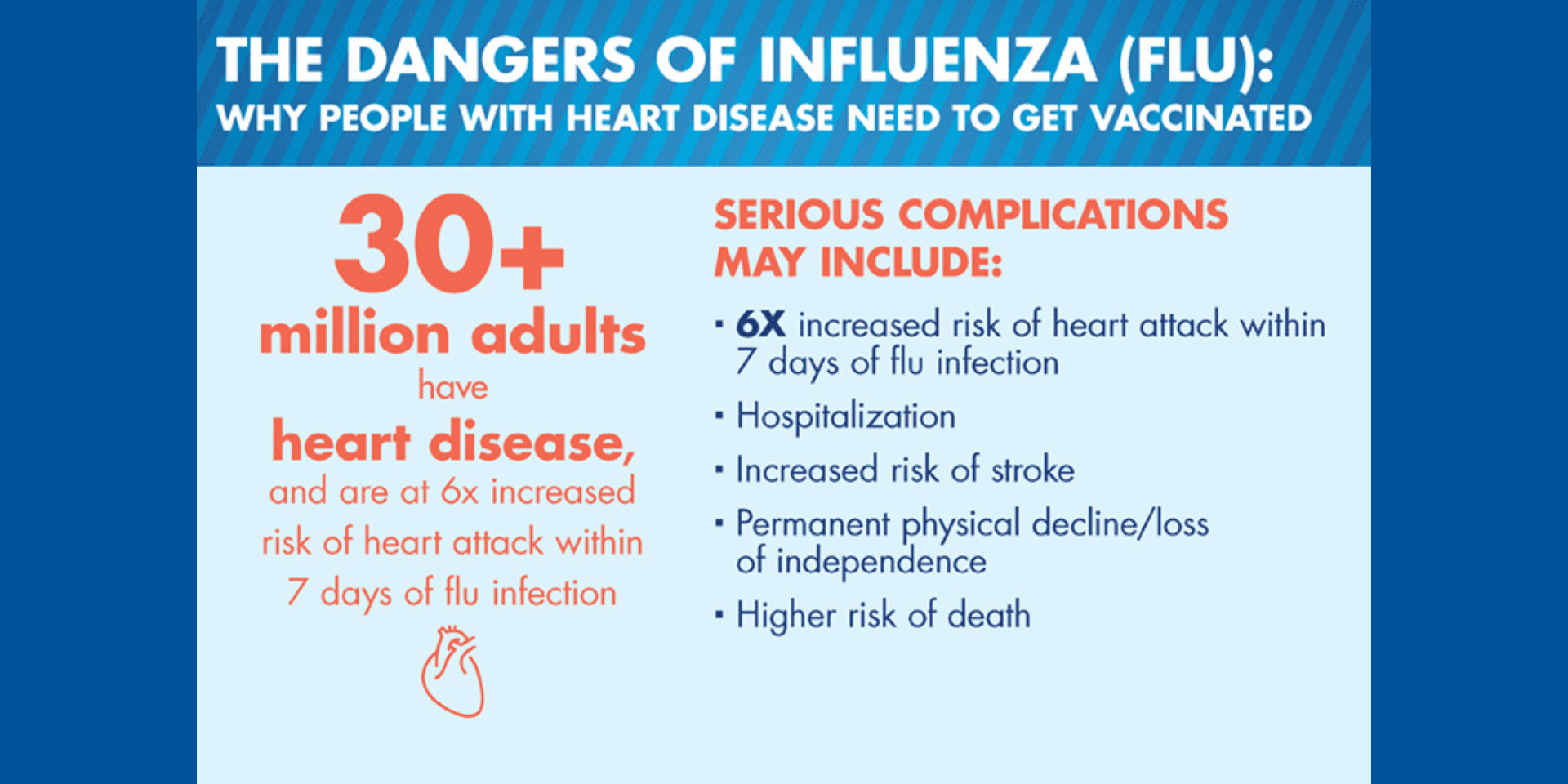
The Dangers of Flu

2. COVID-19 Vaccine

COVID-19 does more than affect the lungs. It raises the risk of heart attack, stroke, blood clots, myocarditis and heart rhythm problems, and people with heart disease are at higher risk of severe illness.

The ACC’s guidance supports seasonal COVID-19 vaccination for adults with heart disease, citing lower rates of severe illness, death, heart attack and long COVID symptoms. CDC currently recommends COVID-19 vaccination based on individual decision-making with your clinician. Heart disease is one of the conditions that makes the benefit greatest.

Who should get it: Adults with heart disease should talk with their cardiologist or primary care doctor about the current season’s vaccine. Recommendations have changed in recent years, so ask each fall.

Many patients ask about myocarditis after mRNA vaccines. It’s rare, occurs mostly in young men, and is usually mild. COVID-19 infection itself carries a higher risk of myocarditis than the vaccine.

The Threat of Coronavirus (CoV) to Your Cardiovascular Health: Demetrios  Panagiotou, MD, FACC: Cardiologist

3. Pneumococcal (Pneumonia) Vaccine

Pneumococcal bacteria are a leading cause of pneumonia, bloodstream infections and meningitis. Pneumonia is especially hard on the heart: about 1 in 4 adults hospitalized with pneumonia develops a heart complication, such as a heart attack, heart failure, or an irregular heartbeat.

Who should get it:

  • The ACC recommends a pneumococcal vaccine for adults 19 and older with heart disease.
  • CDC recommends it for all adults 50 and older.

For most people, protection is now simpler than it used to be. A single dose of a newer conjugate vaccine (PCV20 or PCV21) completes the series. People who received older vaccines may need one more dose. See CDC’s pneumococcal vaccine recommendations.

Can Pneumonia Cause Congestive Heart Failure? 2026 Insights | Qaly

4. RSV Vaccine

Respiratory syncytial virus (RSV) is often thought of as a childhood illness, but it causes serious infections in older adults and people with chronic conditions. Among adults hospitalized with RSV, about 1 in 5 has an acute heart event, most often worsening heart failure. People with heart failure or coronary artery disease are at particularly high risk.

Who should get it:

  • All adults 75 and older
  • Adults 50 to 74 with heart disease or other conditions that raise the risk of severe RSV

Unlike the flu shot, the RSV vaccine is currently a single dose, not an annual shot. The best time to get it is late summer or early fall, before RSV season. Learn more about RSV vaccines from CDC.

5. Shingles Vaccine

Shingles is a painful rash caused by reactivation of the chickenpox virus, which stays dormant in the body for decades. Beyond the pain, shingles has been linked to a higher risk of heart attack and stroke, especially in the weeks after an outbreak. People with heart disease are also more likely to get shingles.

The shingles vaccine (Shingrix) is more than 90% effective at preventing shingles. Emerging research also suggests it may protect cardiovascular health.

Who should get it: All adults 50 and older, given as two doses 2 to 6 months apart. Adults 19 and older with weakened immune systems should also get it. Shingrix is not a live vaccine, so it’s safe for most people with heart disease, including those on blood thinners.

A dark-mode chart card titled The shingles shot that also seems to look after the heart, showing bars for the reduction in disease burden over seven years - heart failure 12%, ischaemic stroke in males 12%, ischaemic heart disease 10%, composite cardiovascular endpoint 9%, atrial fibrillation 7% - with the Nature Medicine citation. An original JerryCards illustration, not a photograph or medical image.

Are Vaccines Safe for Heart Patients?

Yes. These vaccines have been studied in millions of people, including many with heart disease. The most common side effects are a sore arm, tiredness or a low-grade fever for a day or two.

A few practical points:

  • Blood thinners: You can safely get vaccines while taking blood thinners. Hold firm pressure on the injection site for about two minutes afterward to prevent bruising.
  • Pacemakers and defibrillators: Vaccines don’t affect implanted heart devices.
  • After a heart attack or procedure: Don’t delay. The flu vaccine is especially helpful soon after a heart attack, and you can be vaccinated during a hospital stay.

Vaccines are one part of protecting your heart. Controlling high blood pressure and diabetes matters just as much.

Frequently Asked Questions

Can the flu shot cause a heart attack? No. The flu vaccine does not cause heart attacks. Studies show it lowers the risk of heart attacks and other major heart events in people with heart disease.

Can I get the flu, COVID-19 and RSV vaccines at the same time? Yes. They can be given at the same visit, usually in different arms. Some people prefer to space them out to limit side effects, which is also fine.

I’m under 50. Which vaccines do I need if I have heart disease? All adults with heart disease should get a flu vaccine every year and discuss COVID-19 vaccination with their clinician. The ACC also recommends a pneumococcal vaccine for adults 19 and older with heart disease.

Does Medicare cover these vaccines? In most cases, yes. Medicare Part B covers flu, COVID-19 and pneumococcal vaccines. Part D generally covers the shingles and RSV vaccines. Check with your plan for details.

Should my cardiologist or primary care doctor give my vaccines? Either one can recommend them, and many pharmacies give them too. What matters most is that someone reviews your vaccine record each year. Bring it up at your next cardiology visit.

Protect Your Heart This Season

Our practice reviews every patient’s vaccination status as part of comprehensive heart care. If you have heart disease and aren’t sure which vaccines you need, ask at your next visit. If you have new symptoms, see the 10 warning signs you should see a cardiologist.

Request an appointment or call (813) 540-4322.

602 S Audubon Ave, Suite A, Tampa, FL 33609

Medical Disclaimer

The content provided on the Ascent Cardiology website is intended for general educational and informational purposes only. The information, articles, and media presented on this website do not constitute medical advice, diagnosis, or treatment recommendations. Content published on this website is not intended to replace consultation, evaluation, or treatment by qualified healthcare professionals, including the providers at Ascent Cardiology or other licensed medical professionals.

If you believe you may be experiencing a medical emergency, call 911 or seek immediate emergency medical care.

The medical information, opinions, and educational materials presented on this website are provided for general awareness and may not reflect the specific clinical practices or medical opinions of Ascent Cardiology or its providers. Reliance on any information provided on this website is solely at your own risk.

This website may include links to third-party medical or educational websites for informational purposes only. Ascent Cardiology does not control, endorse, or assume responsibility for the accuracy, reliability, or content of any third-party websites linked from this site.

Sources