Heart Attack at 35,000 Feet? What Happens During an In-Flight Cardiac Emergency

Heart Attack at 35,000 Feet? What Happens During an In-Flight Cardiac Emergency

A passenger slumps in a seat. A call bell chimes, and a flight attendant asks over the intercom, “Is there a doctor on board?” An in-flight cardiac emergency is one of the most stressful events that can happen at 35,000 feet, for the patient, the crew, and anyone who volunteers to help.

Fortunately, these events are uncommon. A large study in the New England Journal of Medicine reviewed nearly 12,000 in-flight medical emergencies and estimated about 44,000 such emergencies worldwide each year, out of hundreds of millions of passengers. As an interventional cardiologist, let’s walk you through what actually happens, step by step, when a heart emergency strikes in the air.

Here's what happens when airline passengers have a medical emergency mid- flight | CBC Radio

1. What Happens When Someone Has a Heart Attack at 35,000 Feet?

On the ground, a suspected heart attack sets off a well-rehearsed sequence: a 12-lead ECG within minutes, blood tests, and for many patients a trip to the cardiac catheterization lab to open the blocked artery. In an aircraft cabin, almost none of that is available.

The main challenges are:

  • Limited diagnostic tools. There is usually no 12-lead ECG and no lab testing. Diagnosis depends on symptoms, a quick exam, pulse, and blood pressure.
  • Restricted medical supplies. Airline medical kits carry basic medications, oxygen, and an AED, but not the full tools of an emergency department.
  • A cramped, noisy setting. Narrow aisles, engine noise, and turbulence make examining and treating a patient difficult.
  • Distance from definitive care. The treatment that matters most for a major heart attack, restoring blood flow through the blocked artery, is only possible in a hospital. Over the ocean or remote terrain, that can be hours away.

That is why the goal on board is to stabilize the patient, recognize who needs urgent care, and get them to a hospital as quickly and safely as possible.

2. The Most Serious Cardiac Emergencies That Can Occur During a Flight

EmergencyWhat it isWhat it can look like on board
Acute myocardial infarction (heart attack)A blocked coronary artery starves part of the heart muscle of bloodChest pressure or pain, pain spreading to the arm, jaw or back, sweating, nausea, shortness of breath
Sudden cardiac arrestThe heart's electrical system fails and it stops pumping effectivelySudden collapse, no response, no normal breathing, no pulse
Serious arrhythmiasA very fast, very slow or chaotic heart rhythmPounding or racing heartbeat, dizziness, fainting, chest discomfort
Acute heart failureThe heart cannot keep up, and fluid backs up into the lungsSevere breathlessness, inability to lie back, cough, frothy sputum
Cardiac syncopeFainting caused by a rhythm problem or blocked blood flowCollapse without warning, often with exertion or palpitations beforehand

Not every collapse is a heart emergency. Fainting is the single most common in-flight medical problem. In the NEJM study, syncope accounted for 37% of emergencies. Most of these episodes are vasovagal syncope: a temporary drop in heart rate and blood pressure, often triggered by dehydration, standing up quickly, alcohol, a long time sitting upright, or the lower cabin oxygen.

Vasovagal fainting can look frightening, but it usually has warning signs (feeling flushed, nauseated, pale, or lightheaded) and the person typically wakes quickly once lying flat. A collapse with no warning, during exertion, with chest pain or palpitations, or with no quick recovery is more worrisome for a cardiac cause. Learn more about life-threatening cardiac emergencies you should never ignore.

3. How Flight Attendants Respond to a Cardiac Emergency

Flight attendants are the first responders in the sky. Under FAA rules for U.S. airlines, they receive hands-on training in CPR and AED use, with recurrent training at least every 24 months, along with training on the onboard medical equipment and how the crew coordinates during a medical event.

When a passenger becomes ill, the response typically unfolds in this order:

  1. Assess the situation. A flight attendant checks whether the passenger is awake, breathing, and able to describe symptoms. 
  2. Alert the team. Other crew members are notified, and the flight deck is informed of the emergency.
  3. Request medical help. The crew asks over the public address system whether a doctor, nurse or other medical professional is on board.
  4. Bring the equipment. The crew retrieves the first-aid kit, emergency medical kit, oxygen and the AED.
  5. Start CPR if needed. If the passenger is unresponsive and not breathing normally, crew begin CPR and apply the AED without waiting for a medical volunteer.
  6. Connect to the ground. Many airlines have the crew
    contact a ground-based medical consultation service staffed by physicians, who can advise on treatment and whether the flight should divert.
  7. Keep the captain informed. The flight deck receives regular updates, since the captain has final authority over the aircraft and any change in route.

The crew also manages the space: moving nearby passengers, clearing the aisle or galley so the patient can lie flat, and documenting what happened.

4. Is There a Defibrillator on the Airplane?

On most large commercial flights, yes. In the United States, FAA regulations have required airline passenger aircraft that need a flight attendant and have a payload capacity above 7,500 pounds to carry an automated external defibrillator (AED) since 2004, along with an emergency medical kit. Equipment requirements vary by country, airline, and type of aircraft, so smaller regional or international flights may differ.

What an AED does

In the most common form of sudden cardiac arrest, the heart’s lower chambers quiver chaotically instead of pumping. This is called ventricular fibrillation (VF). A related rhythm, pulseless ventricular tachycardia (VT), is so fast that the heart pumps no blood. An AED analyzes the rhythm through adhesive chest pads and, as Penn Medicine explains, advises a shock only for VF and fast VT. Spoken prompts guide the rescuer through each step, so anyone can use one.

Why minutes matter

CPR keeps oxygen-rich blood flowing to the brain and heart until a shock can restore a normal rhythm. According to Penn Medicine, every minute without defibrillation lowers the chance of survival by 7% to 10%. The American Heart Association notes that CPR can double or even triple a person’s chance of survival.

An AED will not help a heart attack in which the heart is still beating. It is a tool for certain forms of cardiac arrest only. Read more about sudden cardiac arrest and other cardiac emergencies.
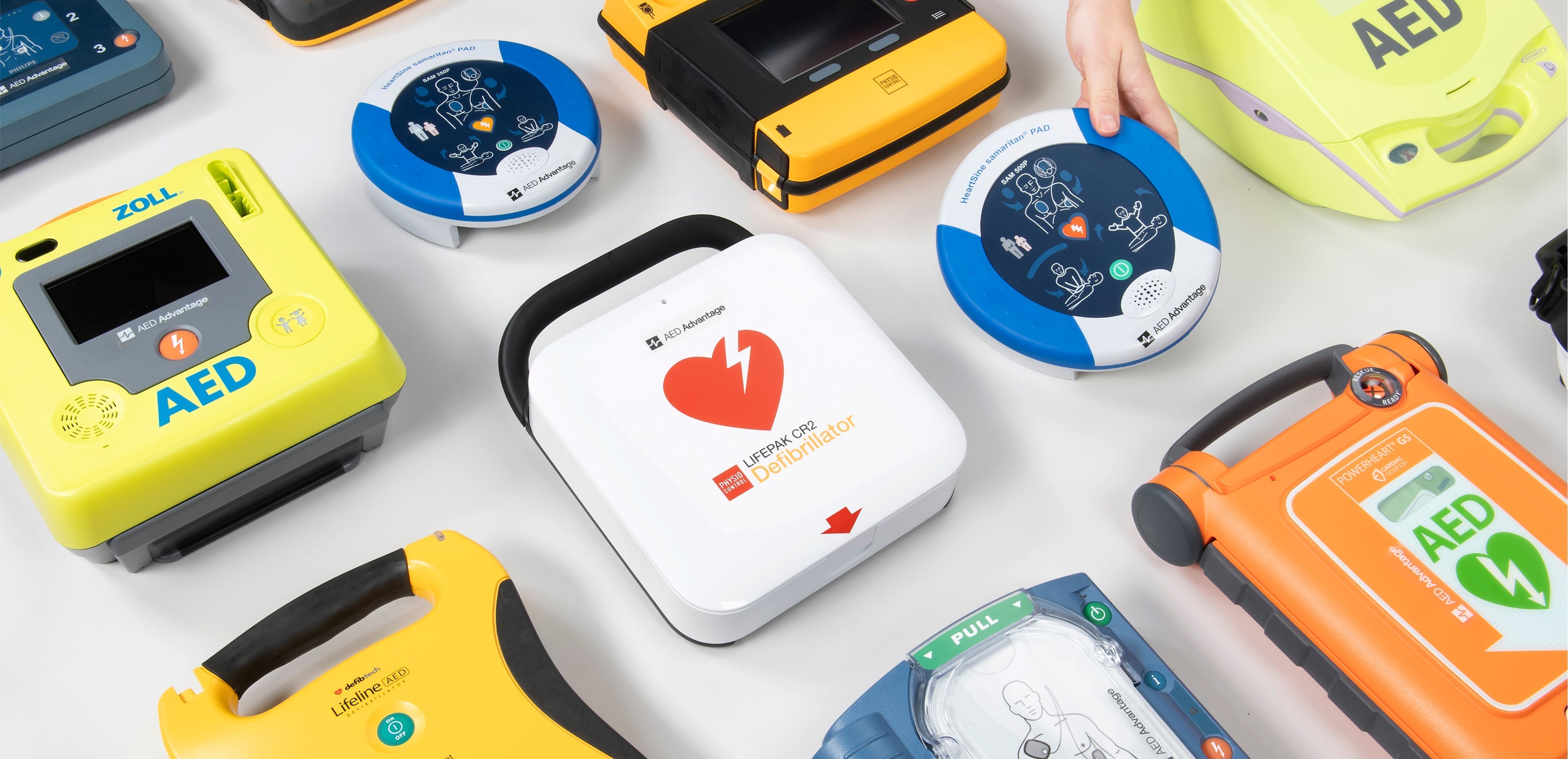
AED Machines: What Are They and Why Do I Need One? · AED Advantage Sales  Ltd.

5. What Happens When a Doctor Volunteers to Help?

When the call goes out, there is a good chance a physician answers. In the NEJM study, physician passengers provided help in 48% of in-flight emergencies, more than any other group. Nurses helped in 20% of cases.

From a physician’s perspective, responding at 35,000 feet is very different from working in a hospital or clinic.

Identifying yourself and taking a history. The volunteer identifies themselves to the crew and, when possible, asks the passenger or companions about symptoms, medical history, medications, and allergies. A passenger’s own medication list or medical summary is extremely helpful here.

Examining with limited tools. The emergency medical kit typically includes a stethoscope, blood pressure cuff, and basic medications. Some aircraft carry a pulse oximeter. There is usually no 12-lead ECG, no blood tests, and no imaging. A cardiologist has to rely on the history, vital signs and physical exam, the fundamentals of bedside medicine.

Treating what can be treated. Depending on the situation, that may include oxygen, laying the patient flat, giving aspirin for a suspected heart attack when appropriate, or helping with the patient’s own nitroglycerin. If the patient becomes unresponsive, CPR and the AED take priority.

Coordinating with the crew and the ground. The volunteer works alongside the flight attendants and, through the crew, with ground-based medical consultants. The NEJM authors recommended that responders request a ground-based consultation if the crew has not already arranged one.

Recommending urgent evaluation. One of the most important things a physician can do is judge how sick the passenger is. That judgment, shared with the crew and ground physicians, informs whether the flight needs to land sooner. The physician advises; the captain decides.

In the United States, the Aviation Medical Assistance Act of 1998 provides liability protection for medical volunteers who help in good faith, though physicians should understand its limits. Most physicians see helping as a professional and moral obligation.

6. Will the Pilot Divert the Plane for a Heart Attack?

Sometimes. Diversion is a significant decision, and it is less common than many people expect. In the NEJM study, only 7.3% of in-flight medical emergencies led to a diversion. Cases where an AED was used were among those most strongly linked to diverting.

The captain has final authority over the aircraft. The decision is made together with the crew, any medical volunteer, and ground-based physicians. Services such as MedAire’s MedLink give crews 24/7 access to physicians who help evaluate the passenger in real time. The factors weighed include:

  • How serious the emergency appears: the passenger’s symptoms, vital signs, and response to treatment on board
  • Time to definitive care: how long until landing at the destination versus the nearest suitable airport
  • Available airports and hospitals: whether a nearby airport can handle the aircraft and has emergency medical services and hospital care, ideally with cardiac capability
  • Operational factors: route, terrain, weather, fuel, and aircraft weight

If the flight continues, the crew arranges for paramedics to meet the plane at the gate. For a suspected heart attack, a diversion or a priority landing can cut the time to a catheterization lab, where blocked arteries are opened. For many large heart attacks, time to treatment is closely tied to how much heart muscle is saved.

7. Can You Survive a Heart Attack or Cardiac Arrest on an Airplane?

Yes, and survival depends largely on quick recognition and the right first response. Heart attack and cardiac arrest are often confused, but they are different conditions with different immediate priorities. The American Heart Association describes a heart attack as a circulation problem and cardiac arrest as an electrical problem.

FeatureHeart attackCardiac arrest
What goes wrongA blocked artery cuts off blood flow to part of the heartAn abnormal rhythm stops the heart from pumping
Is the person awake?Usually yes, and the heart keeps beatingNo: sudden collapse, no pulse, no normal breathing
Immediate priority on boardAlert the crew, keep the person still and seated or lying down, oxygen and aspirin if advised, prepare for rapid hospital careStart CPR immediately and use the AED as soon as it arrives
What saves the most heart muscle or lifeFast access to a hospital that can open the arteryEarly CPR and early defibrillation

The two are connected. A heart attack can trigger cardiac arrest, which is one reason a passenger with heart attack symptoms should be watched closely and the AED kept close by.

What improves the odds

  • Speak up early. Tell a flight attendant right away about chest pain, pressure, shortness of breath, or sweating. Don’t wait until landing.
  • Act fast in cardiac arrest. CPR and an AED shock within minutes give the best chance of survival.
  • Get to a hospital quickly. For a heart attack, the definitive treatment is restoring blood flow, most often with a coronary stent. Learn what stents can and can’t do in the truth about coronary stents.

The outcome of a heart attack in the air often depends less on the flight and more on what happens in the hours after landing. Prompt evaluation in an emergency department is essential, even if symptoms improve during the flight.

8. How Can Heart Patients Prepare for Air Travel?

The best way to handle an in-flight cardiac emergency is to lower the chance of having one, and to be ready if you do. If you have established heart disease:

  • Talk with your cardiologist before you book if you have had a recent heart attack, stent, bypass surgery, device implant, or hospitalization, or if your symptoms have changed.
  • Don’t fly during unstable cardiac illness. New or worsening chest pain, decompensated heart failure, or an uncontrolled heart rhythm are reasons to postpone nonessential travel until you are stable.
  • Keep medications in your carry-on, with a few extra days’ supply in case of delays. Never pack nitroglycerin, blood thinners or heart medicines in checked luggage.
  • Carry a medical summary: your diagnoses, medication list, allergies, a recent ECG, any device card, and your cardiologist’s phone number. If you become ill, this information helps a volunteer physician or ground consultant help you.
  • Stay on schedule with your medicines across time zones, especially antiplatelet drugs after a stent.
  • Move, hydrate, and limit alcohol on longer flights to reduce blood-clot risk and dehydration.
  • Tell your travel companion what your symptoms might look like and where your medications are.
  • Report symptoms early. If something feels wrong, alert the crew immediately.

For a full guide to cabin pressure, blood clots, AFib and flying after a heart event, read our companion article, Can Flying Affect Your Heart? What Every Air Traveler Should Know.

In-Flight Cardiac Emergency FAQs

How common are medical emergencies on planes? They are uncommon. A large NEJM study estimated about 44,000 in-flight medical emergencies worldwide each year. The most common problem is fainting, not a heart attack.

Do all airplanes have a defibrillator? In the U.S., FAA rules require AEDs on airline passenger aircraft that need a flight attendant and have a payload capacity above 7,500 pounds, which covers most large commercial jets. Requirements vary in other countries and on smaller aircraft.

What should I do if the person next to me collapses? Alert a flight attendant immediately. If the person is unresponsive and not breathing normally, CPR should start right away and the AED should be brought. Flight attendants are trained in both.

Is it a heart attack or just fainting? It can be hard to tell. Fainting with warning signs and a quick recovery when lying flat is usually vasovagal. Collapse without warning, with chest pain, palpitations or exertion, or without quick recovery needs urgent evaluation.

Should I see a doctor after a cardiac scare on a flight? Yes. Even if symptoms go away, chest pain, fainting, or a racing heartbeat during a flight should be evaluated promptly, ideally in an emergency department on landing, then with a cardiologist.

Heart Care in Tampa Before and After You Travel

At Ascent Cardiology, we help patients travel with confidence. As an independent, physician-led practice, you see the same interventional cardiologist at every visit, a physician with privileges at Tampa General Hospital and St. Joseph’s Hospital who knows your history.

We offer pre-travel cardiac evaluations and medication reviews, and prompt follow-up after a cardiac scare in the air or on vacation. If you are unsure whether your symptoms need attention, see our list of warning signs you should see a cardiologist.

Request an appointment or call (813) 540-4322.

602 S Audubon Ave, Suite A, Tampa, FL 33609

Sources